Low-Emission Sources in Heat Pumps: Toward More Sustainable Air Conditioning
Climate change and growing energy demand force us to rethink the way we heat and cool our spaces.
In this context, heat pumps stand out as an efficient, eco-friendly alternative to traditional air conditioning systems. However, for their impact to be truly positive, it is essential to focus on low-emission sources.
What does this mean and how does it work in practice? In this article, we explore how they work, what types exist and why at Climas we integrate them into our projects.
What is a heat pump?
It is a system that transfers heat from one place to another using electricity as its main input.
It can be used for both heating and cooling, making it a versatile and efficient solution for residential, commercial and industrial buildings.
Why include heat pump equipment?
Its great advantage is that instead of generating heat (like a boiler), it moves it. This requires much less energy.
A comparison: → A typical electric boiler has an efficiency of 90% → A well-designed heat pump can reach efficiencies of 300% or more → In other words, for every kWh it consumes, it delivers 3 or more in heating or cooling.
Key reasons:
① Energy efficiency Heat pumps consume less energy and are more efficient than traditional heating systems
② Savings They are highly efficient and save money on energy bills.
③ Long service life They last a long time and require little maintenance
④ Access to government incentives or subsidies In some states you can apply for subsidies to implement these systems, so you don’t have to take on the full investment all at once.
⑤ Eco-friendly alternative An active contribution to the fight against climate change, since they produce no harmful emissions.
Types of heat pumps for your project:
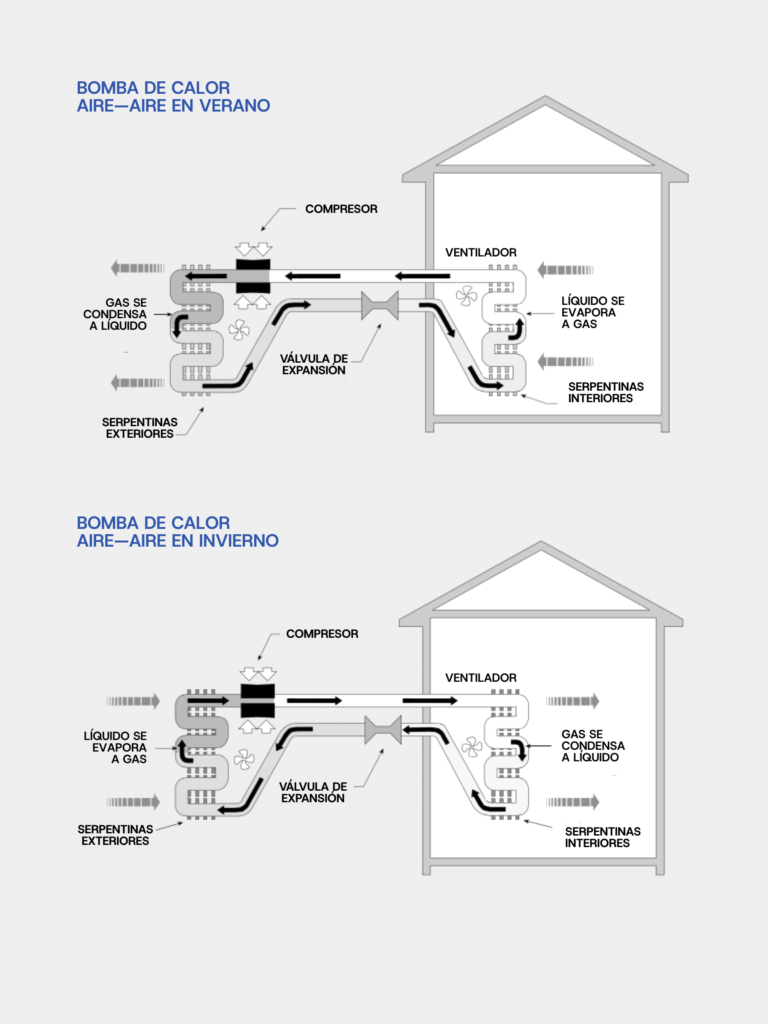
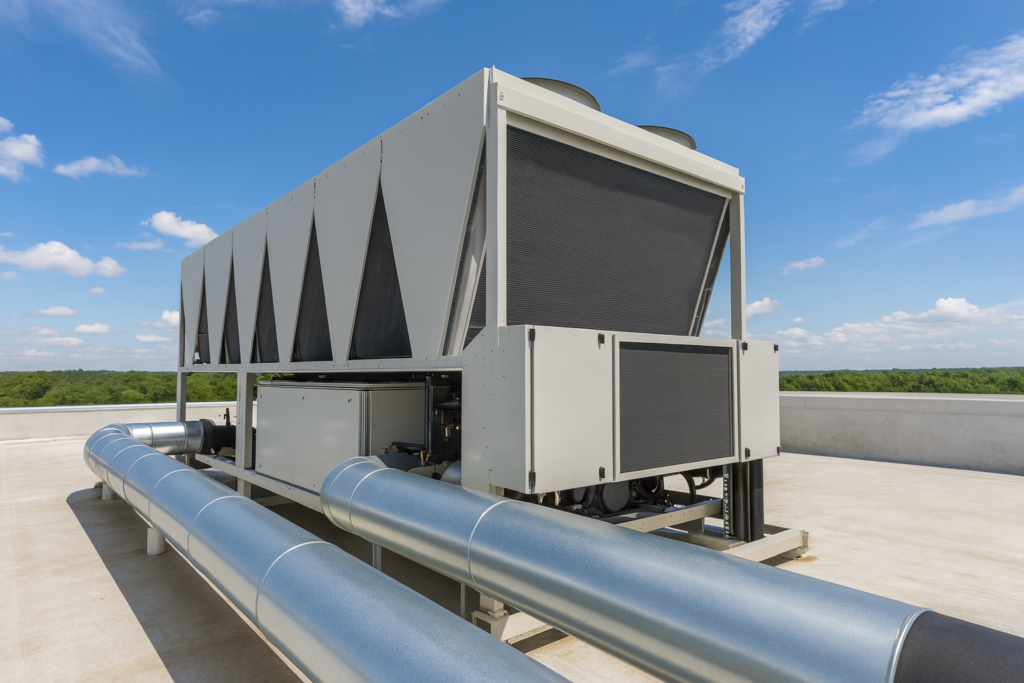
Air-to-Air
The most common. They extract heat from the outside air and transfer it indoors.
Ideal for offices, hotels and shopping centers.
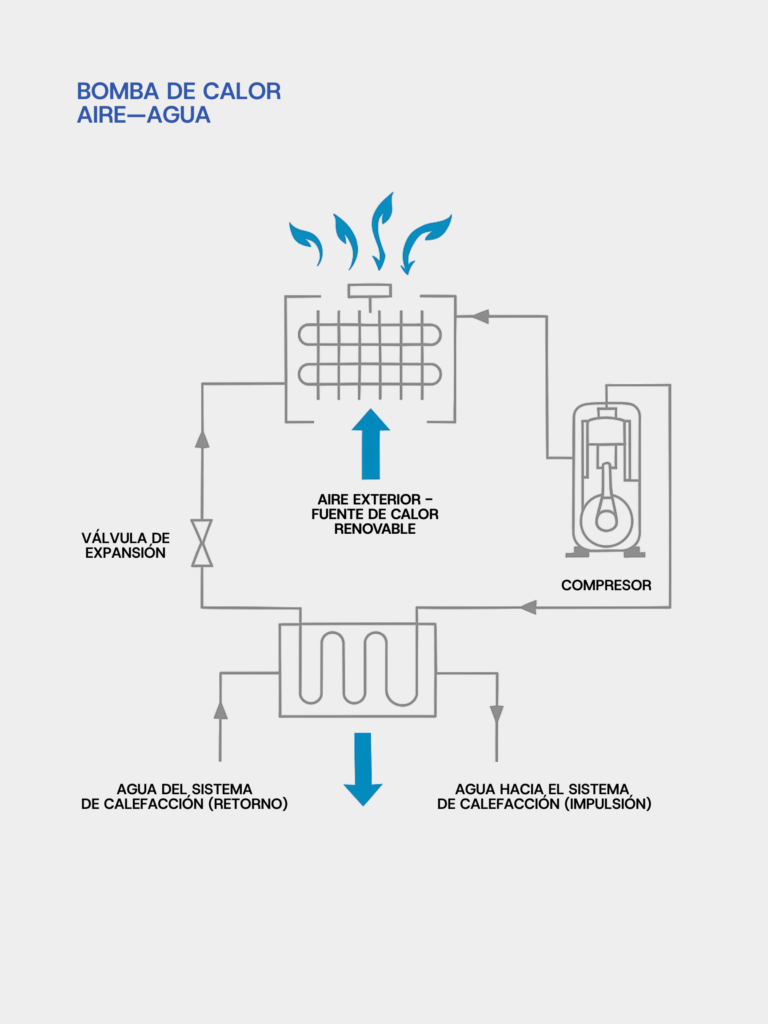
Air-to-Water
They heat or cool water, which is then used in hydronic systems.
Perfect for high-rise buildings, hospitals and centralized systems.
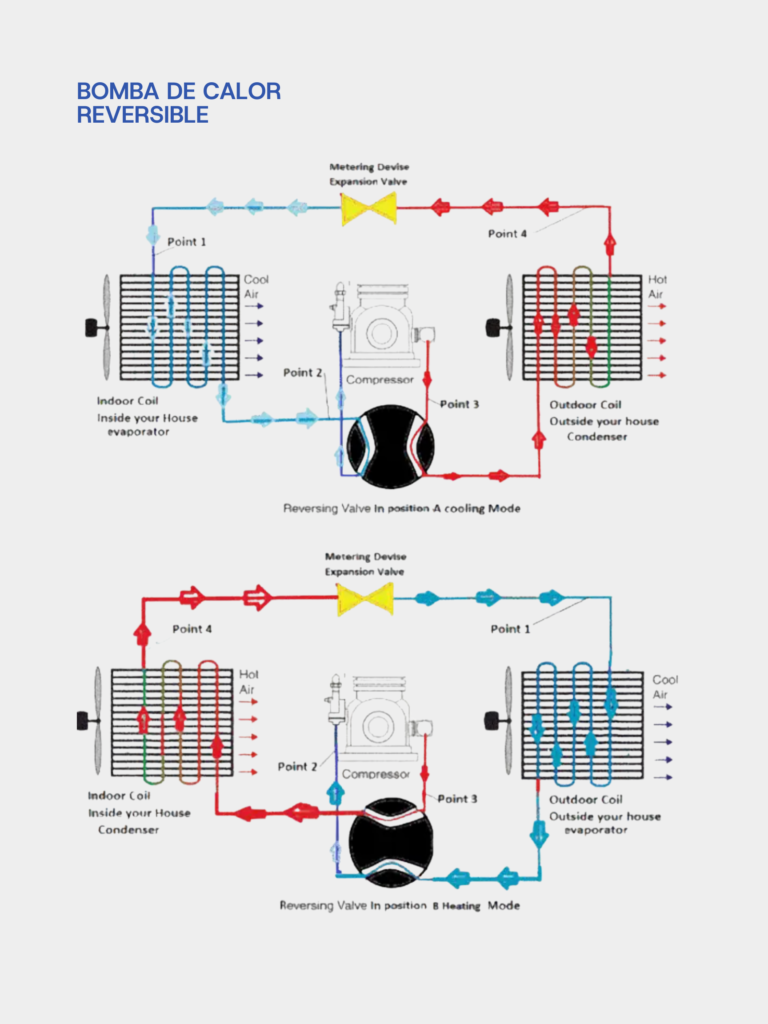
Reversible heat pumps
They can heat in winter and cool in summer with the same equipment.
Full versatility for extreme climates or strong seasonal variation.
Diagrams from thermal-engineering.org and efenergia.com
How are they integrated into an industrial HVAC system?
At Climas, we assess whether a heat pump can be integrated as:
The main climate control system
A complement to existing systems for energy savings
A solution for specific zones with variable thermal requirements
We design hybrid schemes, integrating heat pumps into systems to achieve the highest performance.
Conclusion:
The future of air conditioning necessarily runs through energy efficiency and sustainability.
Heat pumps are a promising technology that benefits the planet, your budget and user comfort. If you are considering installing air conditioning equipment, make sure a heat pump is integrated into its systems.
Would you like to know if a heat pump is viable for your building or plant?
At Climas we help you evaluate, design and implement HVAC solutions with heat pumps tailored to your operation. Schedule a consultation and discover how to condition your spaces better, with less impact and more intelligence.